
Powder Coating / Mission Critical Insights
Powder Coating vs. Paint: Which Finish Is Better for Metal Parts?
Powder Coating vs. Paint: Which Finish Is Better for Metal Parts? Powder coating and liquid paint are both used to protect metal surfaces and give finished components their required color and appearance. However, the…
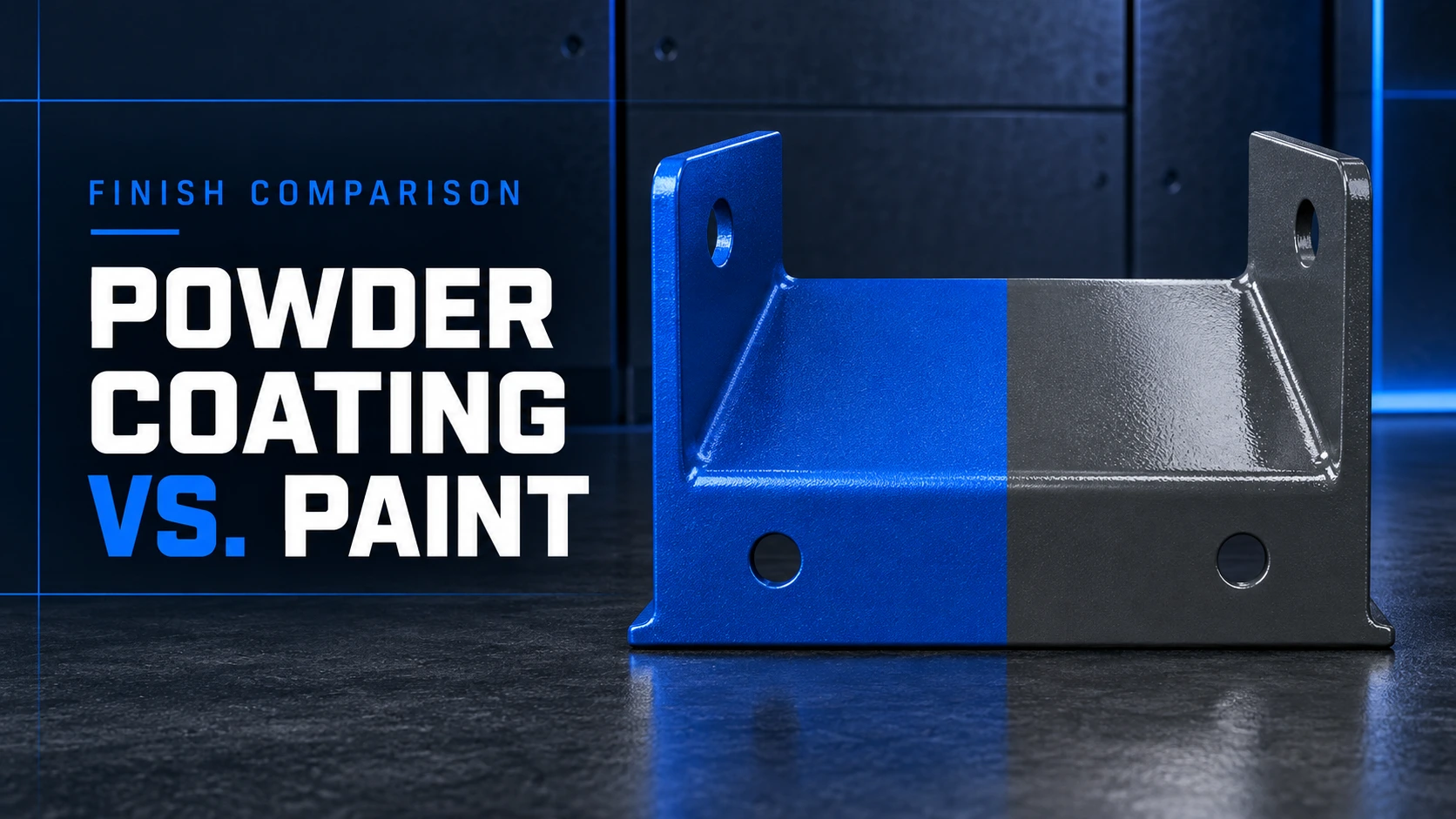
Powder Coating vs. Paint: Which Finish Is Better for Metal Parts?
Powder coating and liquid paint are both used to protect metal surfaces and give finished components their required color and appearance. However, the two systems use different materials, application methods and curing processes.
When comparing powder coating vs. paint, the better option depends on the metal substrate, part geometry, service environment, finish requirements, production quantity and maintenance expectations. Powder coating is often selected for durable, shop-applied finishes, while liquid paint may be more practical for field work, heat-sensitive components and parts that cannot be placed inside a curing oven.
Understanding these differences can help manufacturers, fabricators and project teams specify the right finish before production begins.
What Is Powder Coating?
Powder coating is a dry finishing process. Finely ground powder is electrostatically charged and sprayed onto a grounded metal part. The charged particles adhere to the surface before the component is moved into an oven.
Inside the oven, the powder melts, flows and chemically cures into a continuous coating film. The curing temperature and time depend on the powder specification, part material and metal thickness.
A complete powder-coating process generally includes:
- Inspecting the received components
- Cleaning and preparing the metal
- Removing rust, mill scale or previous coatings when required
- Masking threads and protected surfaces
- Applying the powder
- Curing the finish according to its specification
- Inspecting the finished component
The coating’s performance depends on the entire system. Surface preparation, powder selection, film thickness, grounding, application and curing conditions all affect the final result.
Learn more about Crosslink’s powder-coating services.
What Is Liquid Paint?
Liquid paint contains pigments, binders and a liquid carrier. Depending on the coating system, that carrier may be water or a solvent. The paint can be applied using a spray gun, brush, roller or another application method.
After application, the liquid portion evaporates or reacts as the coating dries and cures. Some liquid coatings air-dry, while others require heat or a chemical curing process.
Liquid paint is available in a wide range of formulations, including:
- Primers
- Enamels
- Epoxies
- Urethanes
- Acrylic systems
- High-temperature coatings
- Corrosion-resistant systems
- Specialty industrial coatings
Because liquid paint does not always require an oven, it can be applied to installed structures, oversized assemblies and substrates that cannot tolerate powder-coating cure temperatures.
Powder Coating vs. Paint at a Glance
| Consideration | Powder coating | Liquid paint |
|---|---|---|
| Material | Dry powder | Liquid coating |
| Application | Electrostatic spray | Spray, brush, roller or other methods |
| Curing | Normally cured using heat | May air-dry, chemically cure or use heat |
| Typical location | Controlled coating facility | Shop or field application |
| Finish consistency | Well suited to repeatable shop finishing | Depends on the coating and application method |
| Film build | Can create a substantial coating in one application | May require primer and multiple coats |
| Color and texture | Broad range of colors, gloss levels and textures | Extensive color and specialty-finish range |
| Field repairs | Usually repaired with a compatible liquid coating | Generally easier to repair in place |
| Heat-sensitive parts | May not be suitable | More coating options are available |
| Installed structures | Components usually need to be removable | Can often be coated after installation |
These are general differences. The coating specification and service environment should guide the final decision.
Which Finish Is More Durable?
Powder coating is commonly selected for metal parts that require resistance to impact, abrasion, chipping and regular handling. Once properly cured, the coating forms a continuous finish across the prepared surface.
However, powder coating should not automatically be described as indestructible. Its performance depends on:
- The condition of the metal
- The preparation method
- The powder chemistry
- Coating thickness
- Edge and weld coverage
- Cure time and metal temperature
- Sunlight and weather exposure
- Chemical exposure
- Physical damage during service
A poorly prepared or incorrectly cured powder-coated part can fail earlier than expected. A properly specified liquid coating system may perform better when it is designed for a particular chemical, temperature or environmental condition.
The Powder Coating Institute describes powder-coating performance as the result of several connected variables, including the powder, equipment, grounding and application conditions. Its technical FAQ provides additional information about powder application.
Corrosion Protection
Both powder coating and liquid paint can help protect steel from corrosion by separating the metal from moisture and other environmental contaminants.
The coating must remain continuous to provide that protection. Scratches, thin edges, missed areas, damaged welds and poor surface preparation can expose the substrate.
For corrosion-sensitive projects, the specification may need to address:
- Surface-cleaning requirements
- Required surface profile
- Pretreatment
- Primer or multi-coat systems
- Minimum and maximum film thickness
- Edge coverage
- Required inspection or testing
- Indoor or outdoor exposure
- Moisture and chemical exposure
Powder chemistry also matters. A coating suitable for indoor equipment may not provide the UV stability required for continuous exterior exposure.
The American Coatings Association notes that corrosion protection depends on the full coating system, including substrate preparation and coverage at edges and joints.
Surface Preparation for Powder Coating and Paint
Neither powder coating nor paint can compensate for an improperly prepared surface.
Before coating, parts may need to be cleaned of:
- Oil and grease
- Dirt and shop residue
- Rust
- Mill scale
- Welding residue
- Oxidation
- Previous paint or coating
- Handling contamination
The appropriate preparation process depends on the substrate and project specification. It may include chemical cleaning, sandblasting, shot blasting or a combination of treatments.
Abrasive blasting can remove surface contamination and create a profile that helps the new coating bond to the metal. The required profile should match the coating manufacturer’s recommendations.
Finish and Appearance
Both systems offer extensive color and appearance options.
Powder coatings are available in:
- Gloss, semi-gloss and matte finishes
- Smooth and textured surfaces
- Metallic effects
- Wrinkle and hammertone finishes
- Transparent and tinted finishes
- Standard and custom colors
Liquid paints also offer a broad color selection and may be preferable when a project requires complex color matching, extremely smooth decorative finishes or effects that are more practical with a liquid system.
For production components, powder coating can provide consistent color and texture when parts are prepared, sprayed and cured under controlled conditions.
Browse the available powder-coating color options.
Part Geometry and Dimensional Tolerances
The shape of a component can affect the coating process.
Powder must reach corners, recesses, welds and internal surfaces while maintaining the specified film thickness. Complex geometries can create areas where electrostatic behavior makes powder application more difficult.
Threads, bearing surfaces, electrical contact areas, mating surfaces and precision holes may need to be masked before coating. The additional film thickness should also be considered where parts must fit together after finishing.
Liquid paint may provide more flexibility for:
- Deep recesses
- Internal areas
- Very thin coating requirements
- Components with strict dimensional tolerances
- Assemblies that cannot be disassembled
- Surfaces that require field application
Providing drawings and clearly marking critical surfaces helps the coating team determine the proper masking and application method.
Curing Temperature and Part Material
Powder coating normally requires the complete part to enter a curing oven. The substrate, attached components and any fillers or seals must tolerate the required temperature.
This can create limitations for parts containing:
- Plastic components
- Rubber seals
- Electronic equipment
- Adhesives
- Heat-sensitive fillers
- Previously assembled components
- Materials that may distort when heated
The component must also fit safely inside the available oven and material-handling system.
Liquid paint may be a more suitable option when a component cannot tolerate elevated temperatures or cannot be transported to a coating facility.
Production Quantity and Consistency
Powder coating is well suited to both individual projects and repeat production work. Once the preparation, masking, powder and cure schedule are established, the process can be repeated across compatible parts.
For recurring production orders, customers should provide:
- Current drawings
- Revision numbers
- Approved color information
- Masking diagrams
- Inspection requirements
- Packaging instructions
- Acceptable appearance standards
Maintaining this information helps reduce variation between orders.
Liquid paint can also support production work, but drying time, environmental conditions and multi-coat requirements may affect scheduling and handling.
Maintenance and Field Repair
Liquid paint generally has an advantage when a finish must be repaired in the field. Damaged areas can often be cleaned, prepared and recoated without removing the entire component.
Powder-coated parts can also be repaired, but the repair is commonly completed using a compatible liquid touch-up coating. Differences in texture, gloss and aging may remain visible.
Project teams should consider how the component will be inspected and maintained after installation. A durable original finish remains important, but accessibility and repair requirements should also influence coating selection.
When Powder Coating Is a Good Choice
Powder coating may be appropriate when:
- The component is made from a conductive, heat-tolerant material
- The part can be transported and placed inside the curing equipment
- A durable shop-applied finish is required
- Consistent color and texture are important
- The project includes individual components or repeat production quantities
- The required powder chemistry is suitable for the service environment
- Masking and dimensional requirements can be clearly defined
Common applications include fabricated steel, frames, enclosures, brackets, equipment components, electrical assemblies, structural components and transportation equipment.
When Liquid Paint May Be More Suitable
Liquid paint may be the practical choice when:
- The structure is already installed
- The part cannot fit inside a curing oven
- The substrate or assembly is sensitive to heat
- The project requires coating at the job site
- Frequent field repairs are expected
- Extremely thin film thickness is required
- The specification requires a specialized liquid coating
- The geometry cannot be effectively coated and cured using powder
The selection should be made according to performance requirements rather than appearance alone.
Information to Include With Your RFQ
Providing detailed project information helps the coating team determine whether powder coating is appropriate and prepare a more accurate quotation.
Include the following when available:
- Part drawings and dimensions
- Base material
- Quantity
- Approximate weight
- Photographs of the current condition
- Existing coating information
- Required color and gloss
- Texture requirements
- Masking or plugging locations
- Critical dimensions
- Finish specification
- Intended service environment
- Packaging requirements
- Target completion date
Mention whether the parts will be used indoors, outdoors or around chemicals, moisture, heat or regular physical contact.
Choosing Between Powder Coating and Paint
The powder coating vs. paint decision should be based on the complete project. Part material, dimensions, geometry, finish requirements, service conditions and future maintenance all affect which system is appropriate.
Powder coating provides a controlled, durable and repeatable finishing option for many metal components. Liquid paint remains valuable for field application, heat-sensitive assemblies, specialized coating systems and components that cannot be oven-cured.
Crosslink provides powder coating and surface-preparation services for parts of many sizes and configurations from its Fort Worth and Seagoville facilities.
Submit your drawings, photographs, specifications and finish requirements through the Request a Quote page.