
Surface Preparation / Mission Critical Insights
Sandblasting vs. Shot Blasting: Which Process Is Right for Your Parts?
Sandblasting and shot blasting are both used to clean and prepare metal surfaces before powder coating or another finishing process. Although the terms are sometimes used interchangeably, they describe different methods of directing abrasive…
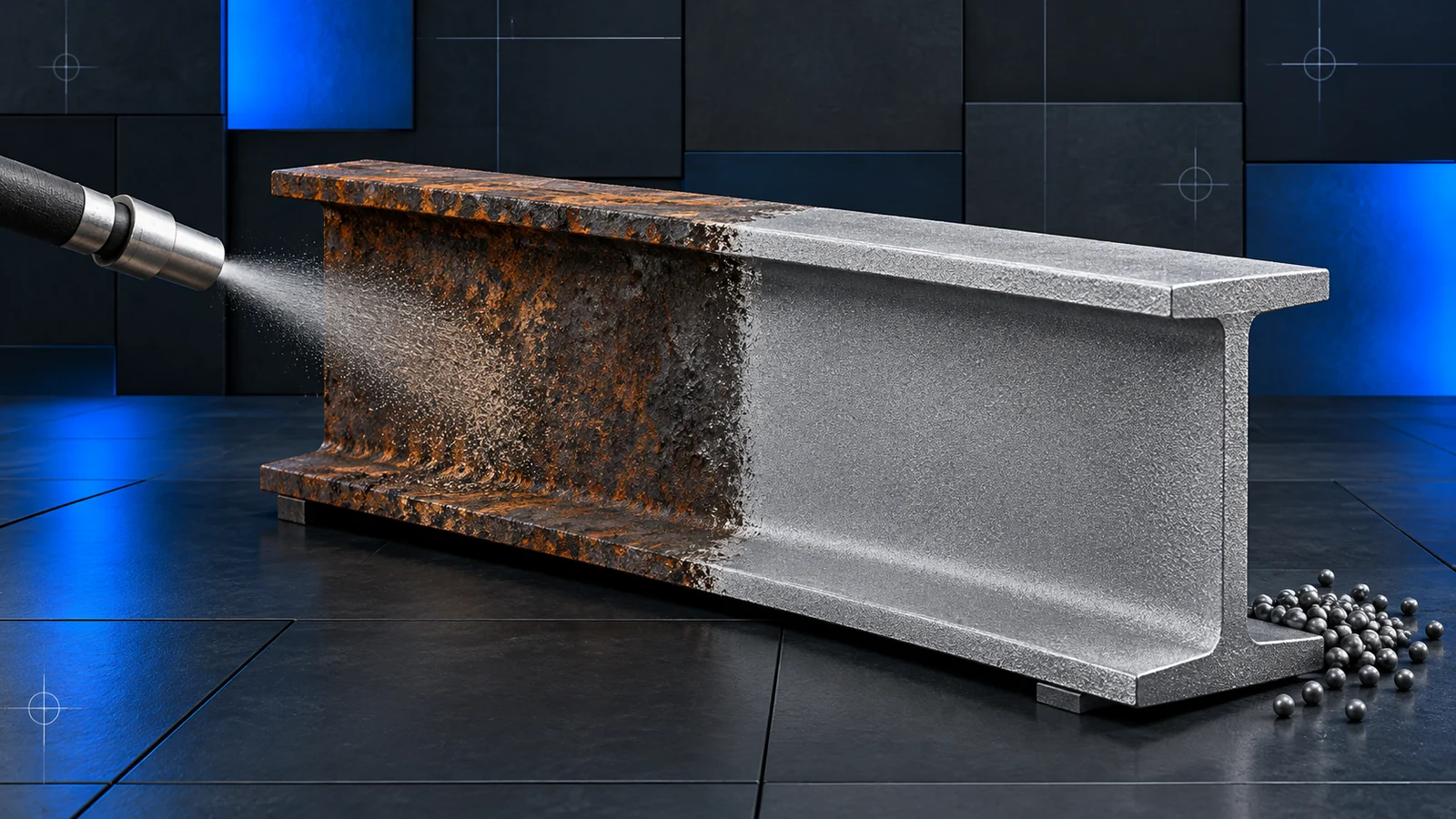
Sandblasting and shot blasting are both used to clean and prepare metal surfaces before powder coating or another finishing process. Although the terms are sometimes used interchangeably, they describe different methods of directing abrasive media at a surface.
When comparing sandblasting vs. shot blasting, the right choice depends on the part’s material, dimensions, geometry, current condition, required surface profile, production quantity and coating specification. Neither process is automatically better for every project.
Why Surface Preparation Matters
Powder coating performs best when it is applied to a properly prepared surface. Rust, mill scale, old coatings, oxidation, welding residue and other contaminants can interfere with coating adhesion.
A suitable blasting process can:
- Remove rust, scale and existing finishes
- Clean areas around welds and fabrication work
- Create a controlled surface profile
- Improve powder coating adhesion
- Produce a more consistent finished surface
- Reduce the risk of early coating failure
The required level of preparation should be determined before coating begins. Project specifications may also identify a required cleaning standard or surface profile.
What Is Sandblasting?
Sandblasting is a common name for air-driven abrasive blasting. The process uses compressed air to move abrasive media through a hose and nozzle toward the metal surface.
The operator can direct the nozzle toward specific areas, making this method useful for parts with varied shapes, corners, recesses, welds and detailed fabrication.
Despite its common name, modern sandblasting does not always use sand. Different abrasive materials may be selected according to the substrate, required profile, project specification and environmental or safety requirements.
Typical applications include:
- Removing rust and corrosion
- Stripping old paint or powder coating
- Cleaning fabricated assemblies
- Preparing irregularly shaped components
- Reaching corners, joints and recessed areas
- Treating selected areas of a part
- Preparing structural and industrial steel
The result depends on the abrasive media, air pressure, nozzle distance, nozzle angle and time spent on the surface.
Learn more about Crosslink’s sandblasting services.
What Is Shot Blasting?
Shot blasting uses mechanical equipment to propel abrasive media against a metal surface. Instead of relying on compressed air at a handheld nozzle, many shot-blasting systems use a rotating blast wheel.
Crosslink operates a 96-inch tabletop Wheelabrator for processing compatible parts. This type of equipment can provide consistent surface preparation across repeat production work.
Shot blasting is commonly used for:
- Removing rust and mill scale
- Cleaning steel components
- Preparing compatible parts in production quantities
- Treating repeat components that fit the equipment
- Creating a consistent profile before coating
- Processing parts that can be positioned effectively inside the machine
Equipment size, part geometry and loading requirements determine whether a component is suitable for a particular shot-blasting system.
Learn more about Crosslink’s shot-blasting capabilities.
Sandblasting vs. Shot Blasting
| Consideration | Sandblasting | Shot blasting |
|---|---|---|
| Abrasive delivery | Compressed air and a nozzle | Mechanical blast wheel |
| Operator control | Directed toward selected areas | Controlled through equipment setup |
| Part geometry | Suitable for varied shapes and recessed areas | Best for parts compatible with the machine |
| Production type | Individual parts, assemblies and varied projects | Repeatable processing and production quantities |
| Typical use | Rust, coating and contaminant removal | Scale removal and repeat surface preparation |
| Processing area | Blast room or blasting pod | Enclosed blasting equipment |
| Main limitation | Processing time depends on geometry and condition | Parts must fit and function within the equipment |
These are general differences. The final recommendation should be based on the actual part and its finishing requirements.
Which Method Works Better for Complex Parts?
Air-driven abrasive blasting is often appropriate when a part has:
- Corners and recessed areas
- Welded joints
- Tubes, frames or irregular geometry
- Multiple surfaces requiring individual attention
- Areas that require targeted cleaning
- Dimensions that do not suit automated equipment
Because the operator controls the nozzle, the blasting pattern can be adjusted while working around the component. However, access, visibility and part positioning still affect the finished result.
When Is Shot Blasting a Good Choice?
Shot blasting may be a practical option when parts:
- Fit within the blasting equipment
- Have geometry that allows the abrasive to reach the required surfaces
- Require repeatable preparation
- Are produced in multiple quantities
- Contain rust, scale or surface contamination suitable for mechanical removal
- Need a consistent profile before coating
For repeated components, mechanical shot blasting can support an efficient production process. The exact result still depends on the abrasive, equipment settings, part placement and initial surface condition.
What About Rust, Mill Scale and Existing Coatings?
The type and severity of surface contamination affect the recommended process.
Light oxidation may require less intensive preparation than heavy rust or tightly bonded mill scale. Existing paint and powder coating can also differ significantly in thickness and adhesion.
Before choosing a process, the coating provider should evaluate:
- The base material
- The existing finish or contamination
- The severity of corrosion
- The required cleaning standard
- The desired surface profile
- Areas that must be masked or protected
- The coating system that will be applied afterward
Photographs are helpful during the quotation stage, but drawings, specifications and a physical inspection may be needed for unusual or tightly controlled projects.
Preparing Metal for Powder Coating
Blasting is one part of the overall coating system. After surface preparation, the component must be handled and processed in a way that limits new contamination before the powder is applied.
The complete process may include:
- Inspection of the received parts
- Degreasing or chemical cleaning
- Abrasive blasting
- Removal of residual dust
- Masking and plugging
- Powder application
- Controlled curing
- Final inspection
The preparation method should match the substrate and intended service environment. A finish used indoors may have different requirements from one exposed to weather, chemicals, moisture or regular physical contact.
Crosslink provides powder coating services for individual components, fabricated assemblies and production work.
Blasting Safety and Abrasive Selection
Abrasive blasting can create airborne dust, noise and other workplace hazards. The risks depend on the abrasive material, surface coating and substrate being processed.
For this reason, blasting operations require suitable containment, ventilation, respiratory protection and operating procedures. OSHA recommends evaluating the abrasive, the surface being blasted and the coatings being removed when selecting controls and protective equipment. OSHA’s abrasive-blasting guidance provides additional information.
Information to Include With Your RFQ
Providing complete project information helps the coating team evaluate sandblasting vs. shot blasting and recommend an appropriate process.
Include the following when available:
- Part drawings and dimensions
- Material type
- Quantity
- Approximate part weight
- Photographs of the current surface
- Existing paint or coating information
- Rust or mill-scale condition
- Required cleaning or profile standard
- Masking and plugging requirements
- Powder type, color or finish
- Intended service environment
- Target completion date
If the project specification identifies a preparation standard, include the complete document or the relevant section with the request.
Sandblasting and Shot Blasting in DFW
Crosslink supports powder coating and surface-preparation projects from facilities in Fort Worth and Seagoville, Texas.
Available equipment and work areas include:
- Blasting capacity for components up to 54 feet in Fort Worth
- A 96-inch tabletop Wheelabrator
- Two Fort Worth sandblasting pods
- Approximately 1,000 square feet of blast area in Fort Worth
- Four blast pods at the Seagoville facility
- A 50-by-50-foot blast facility in Seagoville
The appropriate facility and process are selected according to the part’s size, weight, geometry, condition and production requirements.
Request a Surface-Preparation Quote
The best way to select between sandblasting and shot blasting is to evaluate the actual component and its coating requirements. Send Crosslink your drawings, photographs, dimensions, material information, quantity and specifications.
Request a quote for sandblasting, shot blasting and powder coating services in the Dallas–Fort Worth area.